With weeks of studying maps, forums, and online imagery in the books, I couldn't wait to fish, yet another lake I have never been too,
Sam Rayburn Lake in Texas. Now Sam Rayburn Lake is only about 40 miles away from Toledo Bend although it fishes a lot differently, I had my game plan set. I knew where I was going to be fishing, what lures I was going to use, and what lure to rod to reel combination I was going to attack with. But in usual

tournament fashion, the skies turned dark, the wind picked up, and the flags were flying in every direction except south. Now, let me be clear, I knew a front was in the works, and I knew it was going to be cold, but ice, sleet, and snow, that I didn't know.


As I arrived to Rayburn, it was all I could do to not stop at every scenic view of flooded cypress trees that I could see from the road side. And with the wind screaming at around 30 miles per hour, it didn't take me long to realize that game plan "A" was a no go, and that I was going to have to regroup, skip plan "B" and go straight to plan "C".
Luckily, thanks to Charles S. of
Chicky Tackle, I was put into contact with
Roger Bacon, a local guide, owner of
Roger Bacon Outdoors, an avid tournament angler, and contributing developer of plan "C", who knew this lake and the conditions like he knows how to butter bread.

As I arrived at my second launch spot, I had to

unload, retie, and double up every piece of
clothing I had. During this process it actually began to snow and I even started to question my insanity, but this was
Sam Rayburn Lake, and there was no way I was going to miss a second of fishing time.


As I got in the water, I immediately realized the water temps were 49 degrees, a LOT colder than anything I am used to fishing. With my plan of fishing 8 to 14 foot depths, everything I had rigged was set to work the water columns at every foot within that range, but in the back, front, and sides of my mind, all I could think about was the possibility of pre-spawn bass that had moved up in preparation to spawn over the last two weeks, were likely going to be deeper than most expected. As I crossed my first bay the water depths were all over the place from 4 feet to 40 feet, there were ledges, points, flats, and humps, everything I would normally look for in a freshwater fishery. As I was able to make my way onto the spawning flats that were covered in hydrilla, six feet below the water, I began my attack. Fishing Rayburn is different than a lot of places, you can see the bottom on your depth finder reading 15 feet deep, but the hydrilla is growing 9 feet tall, leaving you only a 6 foot water column to work with, unless of course you want to punch into the depths of the hydrilla.


After more than an hour of working almost every technique I knew and every lure I had on, I got the feeling it was time for a change. I knew it was time to go offshore. Time to get out the 3/4 - 1 oz jig and pigs, and the giant crank baits. As I made my mind up, I began to look for old creeks running in 25 to 35 feet of water and scanning for cover ( brush, laydowns, stumps) along the old river and creek channels that laid below the 114,000+ acres of surface water. This can be a chore to uncover, even with
electronics, but after some
pedaling around, I was able to find a few key areas that appeared to be holding a few fish. As I was doing my best to follow a hidden creek channel 30 feet below the surface, I came across a ditch within the channel. It was about 4 feet wide, and 2 feet deeper than the creek itself, and I could see 2 good size fish sitting on the edge of the 2 foot ledge in what ended up being 33 feet of water. I turned my
Hobie Pro Angler around and went directly over the same area, as I passed

over the fish, I threw one buoy marker to the left and one to the right about 15 yards on each side of me. I then got positioned into the wind where I could throw across an imaginary line between the buoys and work my
Rockport Rattler Football Jig right through the ditch. After what felt like an eternity, my jig finally landed on the bottom, and with slow and steady stop and go drags, making sure to not lose contact with the bottom, I felt the lure fall off the ledge and stop. I slowly reeled down and just sat on it for about 30 seconds. I didn't jig it, didn't drag it, and didn't budge it, when all of a sudden I felt a slight tap. I still didn't move it, but my heart began racing, and then I felt her, she just turned her head enough to give me the

confidence that a fish had just sucked up my jig, I reeled down more and set the hook with everything I had, and within a couple of reel turns, I set it two more times, there was no way I was going to let this fish get away like the giant I lost at the boat in Florida because I set the hook like ninny. As she surfaced I could tell she was big, and coming from those depths she had a lot of white color, and her eyes looked like they wanted to bulge from her sockets. When I got her on the deck, I immediately took some quick photos a fast measurement then released her back into the abyss. I couldn't have been more pleased with the feel that my
13 fishing rods had just displayed in depths I rarely fish. I could feel every branch, rock, stump, and fish that came into contact with my lure and I'm not convinced I would have had that type of sensitivity with other rods.


As the wind had now blown me several hundred yards away, I pedaled my way back to the buoy markers and crossed the same ditch, and sure enough there was still fish down there. I followed the same routine, circled around, faced the wind, made the cast,

made the drag, and then bam, another fish on. This one was fighting even harder than the last one, but as it surfaced, I could tell it was smaller, or should I say not as big, because she too has a pig to be proud of. I ended day one with a pattern of sorts, an area I was getting comfortable in and best of all, I was fishing in depths I knew most people would just overlook.


As I made it back to the truck and to cell service, the first thing I did was send Roger a picture of the fish I landed. His response was, " please call me immediately." When I got Roger on the phone and told him how I was catching them, he immediately responded with some areas of deep water I needed to go check out, and gave me some tips on what to look for and how to fish it. It was like I had a bass resource manual on the end of the line, the knowledge that Roger has about Sam Rayburn Lake and bass fishing in general is second to none.


The next morning, I took my crayon map, and the knowledge that Roger shared the day before, along with a new lure that he recommended and began a long trek. The wind wasn't as bad, the sun actually shined for a little while, and ducking through coves, and hiding behind islands for my couple mile trek made it all enjoyable. I was able to find more consistent deep water with ledges, old creeks with hard turns in it, and some stump rows and blow downs that all held fish throughout the day. The best part of this trip was that I landed the majority of my fish on a crank bait.

This wasn't just any crank bait, but a
6th Sense Lures crank bait, and it performed


flawlessly. I had this lifelike crank digging up the bottom in water depths up to 35 feet, and the best part about it was that it didn't wear me down like most big deep diving lures do. It acted almost as if it had a tighter wobble, yet was able to still get down fast and deep even with a slow retrieve, I could see it on the sonar digging in the mud and then jolting up as it got underneath me, it is hands down one of the smoothest, easiest, cleanest running cranks I can ever remember using in depths this deep. I ended up landed several 3 to 4 lbers and had a total of around 9 fish for the day with my three longest combining a total over 60 inches. I did find some even bigger fish on the new
Lowrance Gen3, but chose to let them sit until tournament day.


The day before the event, I decided to take it easy, short paddles, easy launches, and a completely different area than before. And at the end of the day, I only landed one fish, but I already knew in my mind that plan "C" was going to be my "A" plan for tournament day.


After a good steak dinner at
Jackson Hill Park, all anglers made there way across the bridge to
Cassells-Boykin Park for the captains meeting. There we listened to rule changes, professional expectations, guidelines, recommendations, and the fielding of several questions. Robert Field, the tournament director, did a great job of getting the information out clear, concise, and in a timely manor so we could all retreat to our cabins, tents, campers, or motels for the evening to complete rigging for the next days event.


Tournament day was finally here, I was about to launch into waters that I knew held double digit bass and I knew where they were holding. As I launched my
Hobie, I had enough confidence that I knew I could win this event by a landslide, all I had to do was perform. I knew the fish were there, I just had to catch them. As I reached my first area and traded text in the dark with Craig Dye in Tn as I waited for first cast, I realized that I forgot my measuring board in the truck. I had to paddle back to the launch, run to the truck, sprint on the pedals back to where I wanted to start, and then catch my breath, luckily I left early enough and caught my mistake early enough that I still had about 10 minutes before "lines in the water" time. As 7 a.m. rolled around I made my first cast, it


landed exactly where I wanted it, exactly where I could see the fish on the depth finder minutes before, and with each cast came a 5 minute retrieve of the
Rockport Rattler Football Jig. On my first cast, fish on, but it was just over 15 inches, I was surprised at the size, but took my picture and released him. Next cast, a 14 inch bass, took a pic and released. Two cast later I swapped to the
6th Sense Lures crank bait and landed another, this time it was 12 inches. I was in complete amazement, but apparently, as bass do, the big girls had moved. I continued my day landing 8 bass for the tournament with my first one being the largest of the day. It was a defeat in length, but to me, my performance was almost flawless.


At one point I passed over a piece of cover that I could tell had two small fish and one giant. I circled back around and landed my jig just right. within seconds the beast attacked it, I got my three hook sets, and a battle ensued lasting 10-15 seconds with drag screaming several times throughout the short fight. She eventually wrapped me around a piece of cover and I ended up breaking my 50 lbs braid. I passed over the cover again saw the large fish was gone, but the two smaller ones were still there, so I tossed my jig and landed another 14 inch bass. I crossed over the cover again and now there was one fish there, as I eased up, I grabbed my drop shot rod, flipped the bail and watched on the sonar as my lure made its way down 28 feet right in front of the fish. Three minutes later on that same cast, I ended up landed yet another 14 inch fish. I was able to hook all three fish that I could see, and landed two of them, that is a feat I have never experienced and it was awesome.

I ended finishing 12th in the event and am now 4th in the AOY standings, but this tournament will likely always go down as one of my better performances even though the results didn't yield a win.

As always, I have asked myself everyday what could I have done different that would have likely yielded better results, and the best solution I could come up with was to not waste a day enjoying different scenery and making life easy, but better yet, stay in the area the fish are in, just try and catch them in a different environment within the same area. The tournament ended up being won in the same vicinity I was fishing, it was just won in shallower water. Had I spent the day before the event fishing the complete opposite of what I had been successful at, I likely would have found a shallow pattern that would have been a back up plan being all the fish deep were smaller than what was there days before.
A few months ago, I sat down with a world champion angler and asked him to review my strategy for an event. And while he shared a lot of different insights into my plan, the one thing he said that I ignored this trip was.... when you fish foreign water, find an area you like and stick to it. If you know the fish are there, find other ways to catch them, if you like a large cove, learn it inside and out and don't stray away from it. Well that's exactly what I did this event, I found the right area, but I limited myself by not learning everything about it. Instead of venturing off into a new area to fish shallow, I should have stayed local and worked the water column with different techniques in an attempt to build a backup plan within my "A" plan.
The
Kayak Bass Series is a series that is traveling across the country to waters where giant largemouth bass live. It's a series that not only encourages competition and camaraderie, but it offers an opportunity for every angler to up his game and land a new personal best LMB. Even if you don't land in the money, you still have a chance to win in this series, from ice chest, ego nets, light kits, gift certificates, custom lures, and dozens of other high dollar items that the
KBS gives away in their "FREE" raffle, it all helps to enhance the experience. Heck, I finished 12th, but still came home with a $1700 Jackson Big Rig kayak that I won in the raffle. Thanks JK. But no matter where the KBS lands, you better have
good rods and reels, be prepared, and be ready for a fish of a lifetime.
Congrats to all those that finished in the top of this event, it was a challenge for all, and every place was well earned.
I would also like to give a special thanks to Roger Bacon of
Roger Bacon Outdoors for sharing a wealth of information that aided in landing some very impressive pre-fishing beast.
And thank you to all of the sponsors, supporters, and competitors of the Kayak Bass Series, without your support, these events wouldn't be what they are.
Until Next Time,
Stay Safe & Catch1

 Fishing in south Louisiana is well known for the phrase that lines most of our local license plates, "Sportsman's Paradise", due to the many species that lie within our coast lines, from quail to deer, Tarpon to Tuna and Speckled Trout to Largemouth Bass, there is an abundance of game that people travel thousands of miles to experience. But recently, we have been under an aerial attack of constant rainfall mixed with high winds and muddy water. And while many parts of the Louisiana coast have continued to produce great numbers of specs and reds both inshore and off, you have to really pick your days wisely and most of all safely.
 Over the past several weeks I have been following schools of redfish throughout the marshes of Delacroix, La. And while it usually seems easy to just launch your boat or kayak and begin catching reds within minutes, this past weekend was a completely different story.

 Most recently, I have spent my time within a 10 mile radius of my launch location, and every day I ventured out I was able to quickly get on some good action. Clear and shallow water site fishing around vegetation that was matted up on the surface, like a field of 3 day old cut hay, seemed to be the ticket. The thick grass was keeping the water filtered and it was almost like fishing in an aquarium. There were many times where the fish weren't tailing above the water, but with the clarity being what it was, we could see the fish in pods up to 50 to 70 yards away glowing in the sunlight. It was weeks of nonstop action, and easy numbers for clients. Sometimes we would go just half a day and easily see over 100 redfish.
 And then just when you began thinking you hung the moon, a 25 mph south east wind blows in and shakes it all up. On one day the water levels were normal and the next they were two feet higher, all the grass matts were now below the waters surface, the 12 inches of water we were catching them in was now 3 feet deep, and what seemed like an army of redfish the day before, quickly turned into a popular hunting ground that was cleaned out by a forest fire. There wasn't a redfish to be found for miles.

 After about 5 stops in the normal hot spots and only landing a few specs and bass where the reds were supposed to be. We finally decided to make a move to deeper water. It wasn't deep to most, but when you have been fishing 10 inches to 3 feet all day, moving into a fast moving canal with a point on it and a drop off from 3 feet to 11 feet, that's what we consider deep. We ended what started out as an extremely slow and frustrating day with a box full of redfish in less than an hour. Now, the question is why? Why did these fish move
  out of the shallows? All of the bait in the world had been blown up and into where the fish were the day before, but on this day with water levels were two feet higher and they were all gone.
 What was it that made them move and congregate into deeper water, and were we catching them coming back into the shallows, or were we catching them congregated in the deep? It's a little bit of that "chicken and the egg" question.
 Now, it's never uncommon for fish to move on a daily basis, and staying ahead of that pattern is what really separates the consistent anglers from the not so consistent ones. We have all fished with people that swear by an area, because last time they fished it they caught a million fish, but when you show up with them you catch nothing, and they give that dumbfounded face followed by, "I don't know what happened, they were here last time???"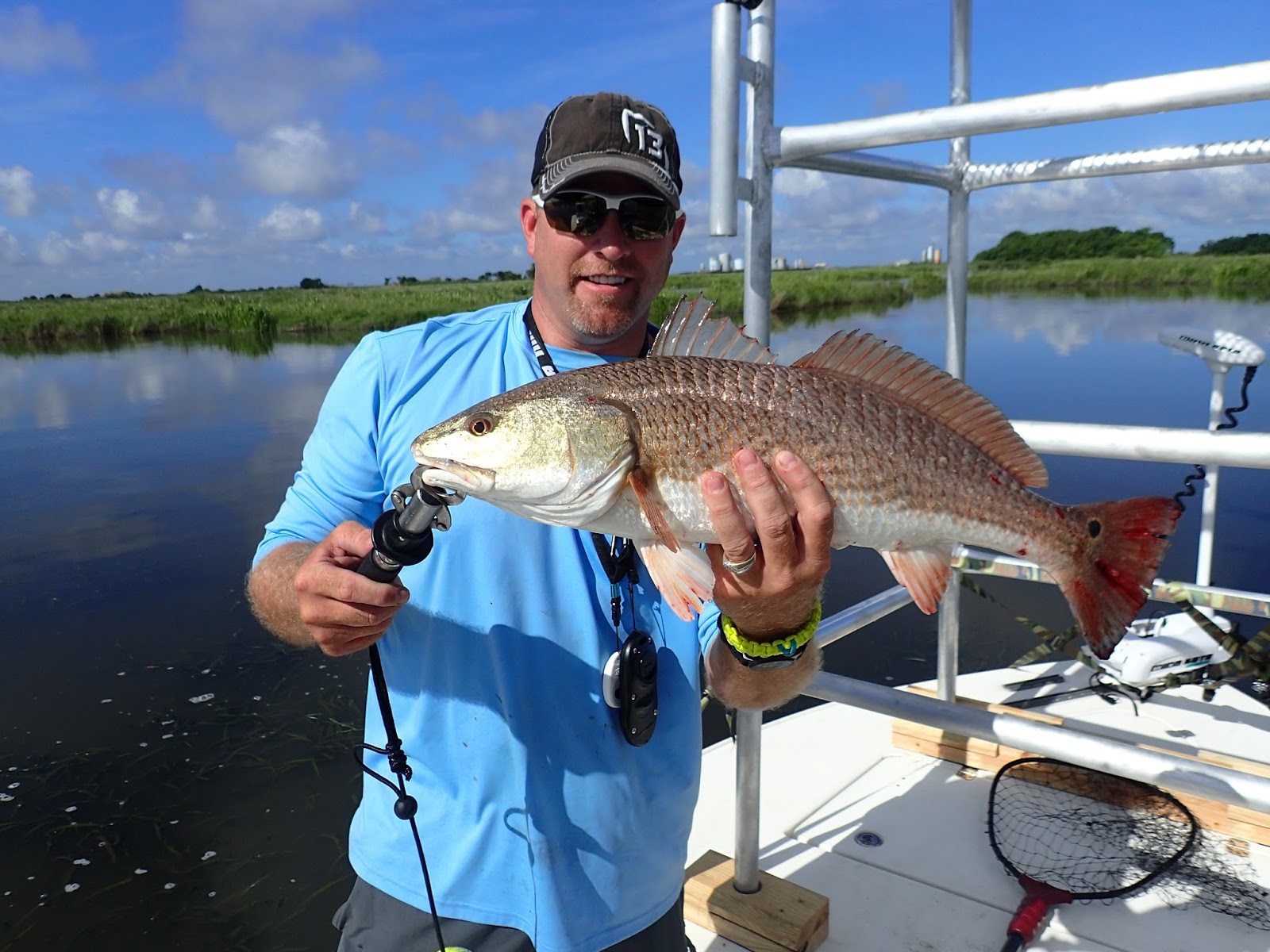
 This is a great opportunity for a teaching lesson, nothing major, just the simple things like: what time of year was it, what were the conditions, falling tide or rising tide, south wind or north wind, before a front or after a front? These are just some simple questions that you need to ask yourself before venturing off to ones honey hole, or better yet your own honey hole. Get a journal(or what I refer to as "the history book"), record the


